

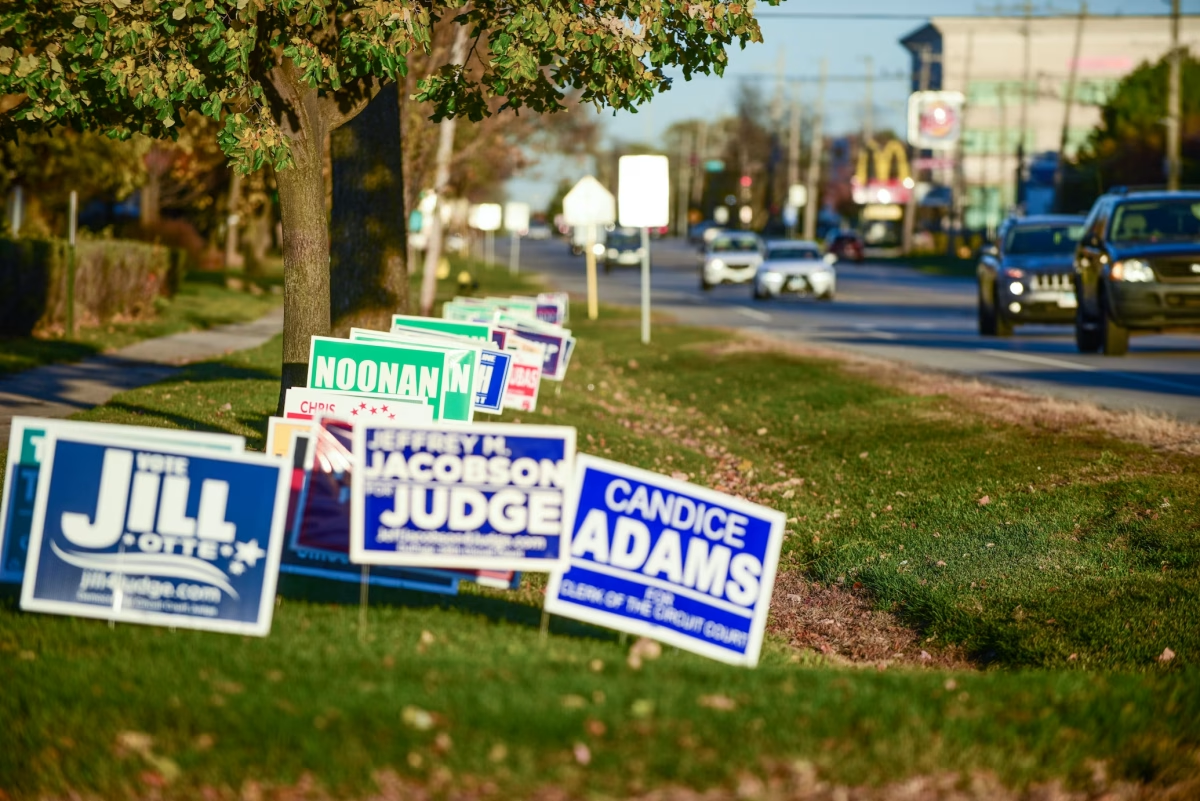
The weeks after Election Day, yards are littered with torn, weathered, wind-blown political signs, but there’s an environmental impact that often is not addressed.
Campaign season comes around, and suddenly, cardboard, PVC plastic, metal stakes, and screen-printed ink spread across every street, median, lawn, and public lot. When the votes are counted, most of those signs stay there for months, even a year.
And these signs do not break down. I have a “Moravian-bound” yard sign from almost three years ago that is still in pristine condition on my lawn.
Because they’re forgotten, because “they ran the campaign” and now it’s “someone else’s job” to remove them, or because the materials make recycling a headache.
And that material problem is real: Many of these signs are made of corrugated plastic (often with a PVC coating) and metal stakes. They’re designed to survive sun, rain, and wind, but not necessarily be disposed of sustainably.
When the infrastructure to collect and recycle them doesn’t exist, what happens? Landfill and visual pollution. Possible hazards include stakes in gutters and signs blown into public roads.
Plastic coatings mean many signs cannot be included in regular recycling streams.
Local governments scramble post-election to collect massive volumes of yard signs: one estimate from Return Polymers suggests up to 10 million pounds of plastic from signage in a major election year, and that is just what has been counted.
Keep in mind that election years encompass more than just the four-year presidential election, and sometimes, there is even more advertising for local campaigns every two years, resulting in an increased number of lawn signs.
But we carry on like this is no big deal. If we care about sustainability, about aesthetics, about civic pride, then removing these signs promptly and disposing of them responsibly should be non-negotiable.
Campaigns must plan for removal before they distribute signs. Leave with no exit plan? That’s irresponsible. If I see signs scattered around of a politician I respect following an election, I mentally file that for the following year. You can’t claim to be a Democrat and then have no concern for the environmental repercussions of your political campaign.
Sign materials must be selected with end-of-life in mind (reuse, recycle, biodegradable). Municipalities should offer drop-off or collection events immediately after elections for the disposal of signs. We, as community members, need to hold campaigns, candidates, and local authorities accountable when we see signs lingering. “Set up and forget” isn’t ok.
Reuse matters; one campaign’s discard could be another campaign’s starting point, or the material can be repurposed for another purpose.
Campaign signs are a footprint. They are not neutral. Every sign placed carries with it a responsibility: to put it up and to take it down. If you can’t commit to both, reconsider putting it up in the first place.
And, if they aren’t cleaned up, it’s our responsibility to do it for them. The responsibility doesn’t disappear, just shifts people. Imagine if the Moravian Democratic or Republican club, or Moravian itself, started a Post-Election Clean-Up Day, where students and local volunteers collected leftover signs for recycling or use in art projects.
As a political science major, I understand the importance of advertising and name recognition in campaigns, but I also recognize the environmental costs. Deer should not be eating plastic campaign signs, and crows should not be using the stakes to hold their nests together. It is our responsibility, as a society, to clean up the messes we start.
If you ran for office, pick up your signs. If you worked on a campaign, volunteer for a cleanup. If you’re a voter, remind candidates that sustainability doesn’t stop at slogans. Civic duty doesn’t end when the polls close.
We deserve cleaner streets, less landfill, and less “oh-well someone else will deal with it” thinking. Because if we keep doing the same thing every election cycle, we’ll keep getting the same result: clutter, waste, and environmental costs.


