

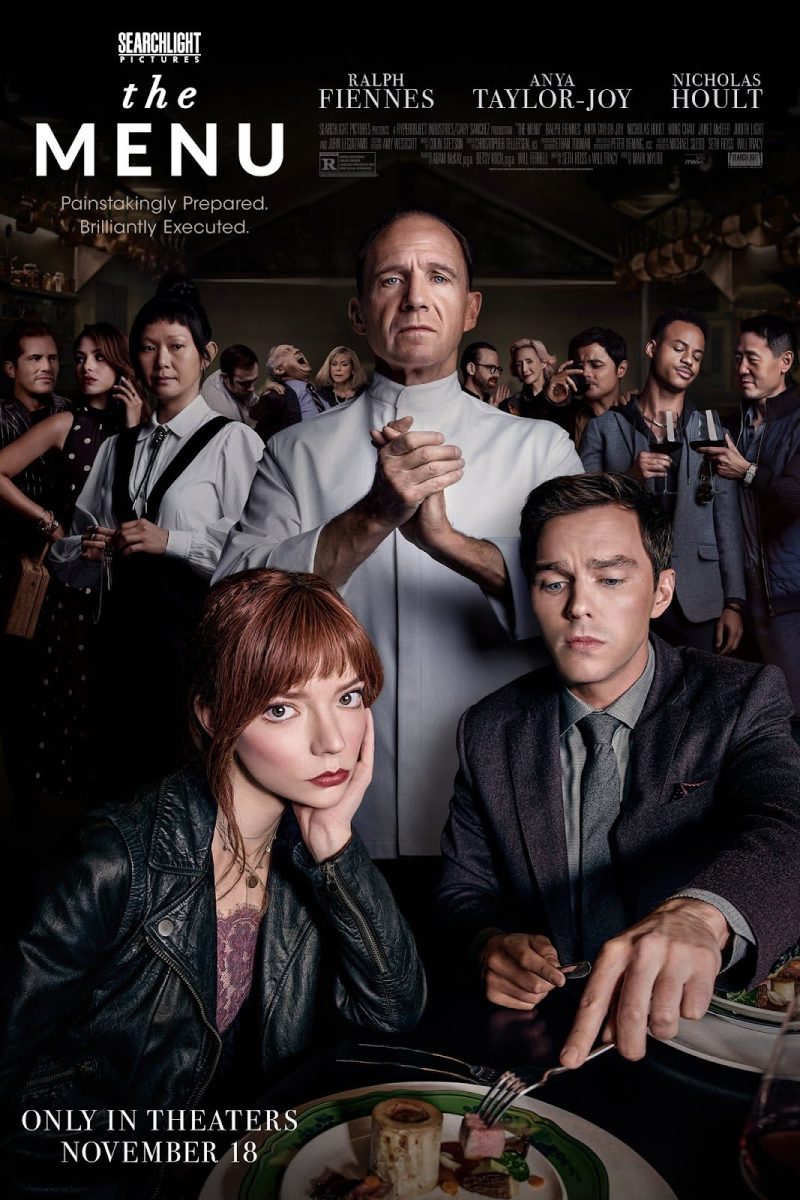
Director Mark Mylod’s “The Menu” is a dark, comedic satire released in 2022, and it is easily one of my favorite films ever. A contemporary critique on class, foodie culture, and celebrity finances: this film has everything I could ever ask for and more.
Starring Ralph Fiennes as Chef Slowik, Nicholas Hoult as Tyler, the self-obsessed foodie, and Anya Taylor-Joy as Margot, the only remotely sane person in this film, this cast is star-studded, and they all perform in their roles stunningly, especially Taylor-Joy.
She performs wonderfully as a juxtaposed character to the elite, providing the human center the film desperately needs.
The film traps a handful of ultra-wealthy diners on a private island run by celebrity chef Chef Julian Slowik, whose tasting menu gradually turns into something much darker and personal.
The absolute pleasure of “The Menu” lies in its precision. Every shot, every line, every smirk feels choreographed like fine dining service: controlled, exact, and simmering with judgment. The cooks heed the chef’s every beck and call, and the film is directed in a similar way.
This is a movie that literally burns class privilege alive, but knows how to make it entertaining rather than scary.
Although they are entirely different universes under different directors, this film always reminds me of “Glass Onion.” They share DNA: both dissect the arrogance of wealth and the emptiness that festers beneath luxury; yet, “The Menu” is tighter, meaner, and far less forgiving. It doesn’t want you to solve a mystery, but to taste your own guilt.
At ninety-odd minutes, it’s a satire that doesn’t overstay its welcome. It’s sharp, funny, and to-the-bone enjoyable.
The soundtrack pulls you in, and the cut scenes displaying the menus and recipes for every course are remarkably similar to a Wes Anderson shot. I love everything about this film.
Now, here’s where I’ll start getting into some spoilers.
The guests: tech bros, washed-up actors, pompous critics, and a cheating husband, each represent a different flavor of privilege. They consume the world, literally and metaphorically, and expect to be congratulated for it.
As the night spirals, Chef Slowik reveals that he orchestrated the entire dinner as an execution, not just of his guests, but of himself and the industry that corrupted him.
He’s a man who once cooked with passion, now trapped in a system that rewards spectacle over substance. He hates his diners for what they symbolize: people who turn art into status. But he also hates himself for feeding them.
Margot becomes the wrench in his perfectly plated machine. She’s not supposed to be there; she’s a last-minute replacement, a working-class outsider among people who’ve never done a day’s honest labor. She sees through the performance and, crucially, refuses to play along. Her confrontation with Slowik and her simple request for a cheeseburger is one of the most satisfying endings I’ve seen in years.
Also, that cheeseburger looks delicious, and I want one every time I watch this movie.
That moment is everything the film has been building toward. Margot strips away the pretense, reminding him what food is actually for: nourishment, joy, comfort. Not ego. Just hunger and satisfaction.
She sees a picture of him in his cabin, working a regular job at a cheeseburger joint, which cuts through the ceremony and reminds both the chef and the audience that humanity matters.
The final scene, where the diners accept their fiery fate while Margot sails away eating her burger, is absurdly poetic. It’s indulgent and cleansing at once, a literal purging of the elite and a symbolic release from their hollow rituals. The smirk she gives as she wipes her mouth with the restaurant’s menu instead of a napkin? Beautiful.
By the end, “The Menu” becomes a manifesto. It’s as funny as it is vicious, and like any good meal, it lingers long after the last bite.


