

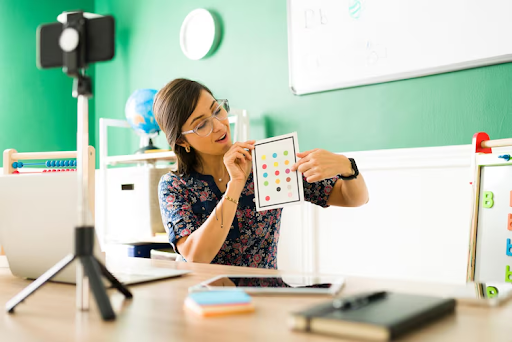
It’s surprising how fast things change. Teaching used to be about lesson plans, messy handwriting, and kids asking to use the bathroom.
Now, it feels like every part of the job is turned into content. If you open TikTok, you’ll find “TeacherTok,” where teachers share classroom tips, stories, confessions, and daily routines. Somehow, this has become part of teaching culture, even if we didn’t ask for it.
As someone preparing to be a teacher, I scroll through these videos as often as I check my email or the weather, almost without thinking. I enjoy the creativity, the decorated classrooms, the tips, and the funny stories. It’s comforting to see others who understand. Still, I wonder when teaching turned into a performance, and what it means if being relatable is just as important as being effective.
TeacherTok creeps in quietly, much like how we end up spending too much time on technology. It doesn’t make a big entrance. Instead, it brings small pressures, like making your classroom look good for the camera or feeling you have to follow trends that don’t help students learn. There’s this quiet idea that if your classroom isn’t “Pinterest-worthy,” maybe you’re not doing enough.
Sometimes, social media goes from being just fun to something more intense, like the recent rush for Starbucks’ seasonal bear cups and seeing people line up at 4 a.m. for something they didn’t need reminded me a lot of TeacherTok, which has been especially highlighted after the pandemic.
One teacher shares a new behavior chart or reward system, and suddenly thousands feel they need it too, not because it suits their students and their needs, but because everyone else is doing it. It creates the same feeling of urgency, of not wanting to fall behind, and is everywhere.
Social media creates an outlet where teacher culture can feel hard to keep up with. We see teachers who have perfect anchor charts, smooth routines, and positive calls home. They share everything, even the snacks they bring, and it makes the rest of us feel like we should do the same, which is not easy, especially for our teachers who are getting into the field or need more experience.
No one shares the real struggles behind teaching, such as burnout, low pay, crowded classrooms, growing student needs, and the worries we bring to work. Those things don’t go viral or aren’t seen because this career isn’t glamorous.
I keep thinking about how many teachers from my generation are already tired before we even start our careers. Social media has given us a set of expectations that no one really wanted. It feels like we’re getting ready to teach in two places: the real classroom with real kids and challenges, and the online world where everyone is watching and judging.
The hard part is that TeacherTok can make you feel connected and alone at the same time. You see teachers who look passionate and energetic, and you wonder why you feel anxious or tired. The truth is, teaching is more complicated than ever, and social media often covers that up with bright colors and popular sounds.
I don’t think TeacherTok is all bad.
It gives teachers a voice and shows the public things they might not see otherwise. It lets educators share real strategies that help students. When it comes to sharing online, it becomes more important than teaching itself, something is lost and muffled. The classroom turns into a place for content, not community.
Students become stories, not people. Learning fades into the background, unfortunately.
Maybe the real problem isn’t TeacherTok, but the culture surrounding it that expects teachers to be entertainers, influencers, and miracle workers all at once. It’s like other cases of over-consumption, where something meant to help us slowly takes something away.
As I get ready to become a teacher, I remind myself that teaching happens in the classroom, not online. The most important moments, such as when a child understands something or shares about their day that won’t go viral, and that’s fine. They aren’t meant to.
TeacherTok might be new to teaching culture, but it doesn’t have to define what we do. We don’t need to perform to be good teachers, and we don’t have to record every moment to show we care. Maybe the bravest thing is to teach honestly and thoroughly, without needing a camera for proof.
Being there for students will always be more important than being seen online.


