

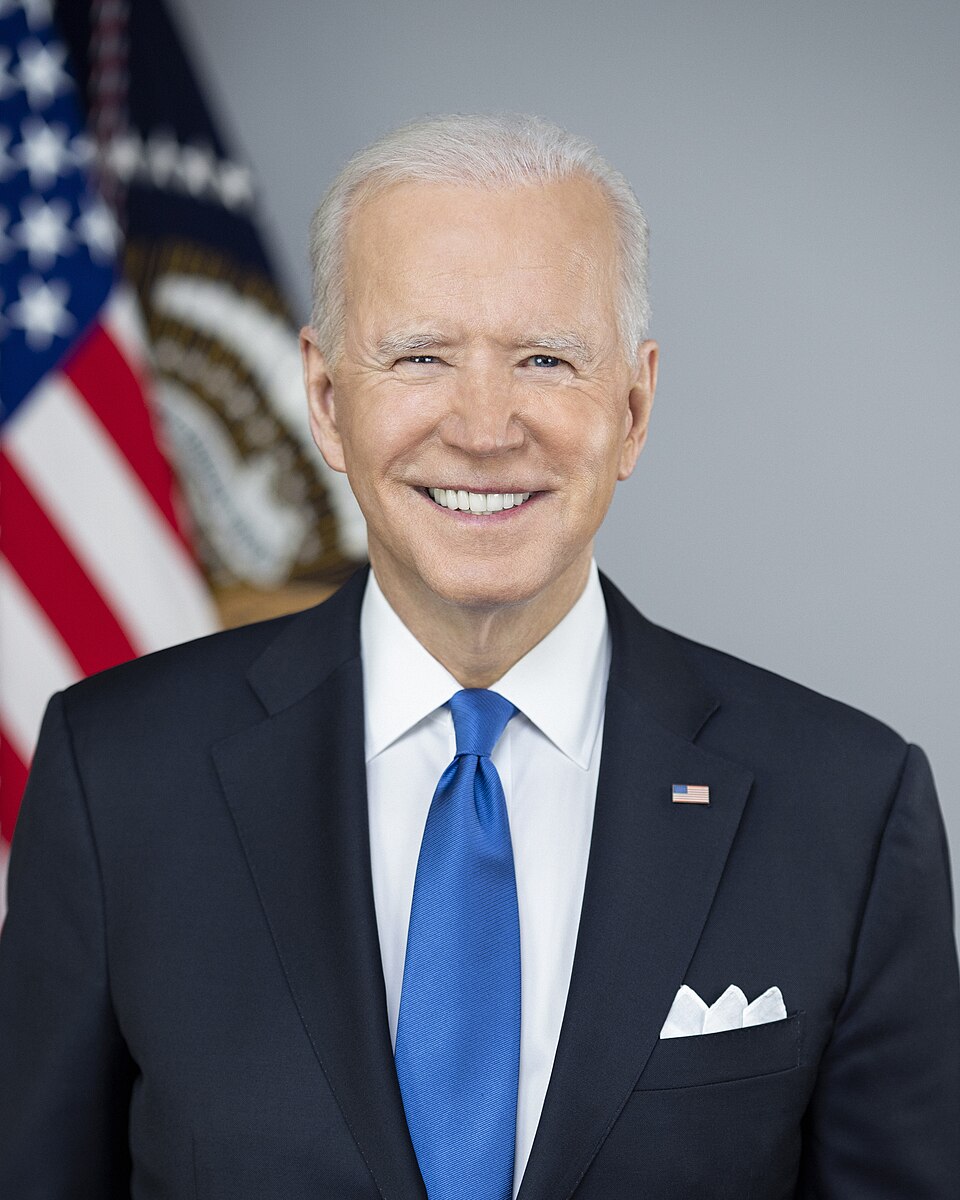
Former President Joe Biden could have gone down in history as a great president. However, one mistake with unmeasured consequences could tarnish his record forever.
Debates about presidents have always been subjective. Factors such as the moment in time, the emotions Americans feel, and pluralistic political views all shape how the president is viewed. Even polls today won’t tell us the truth about how a president will be remembered.
An example of this is Harry S. Truman, a president held in high esteem by historians. In his day, he had an abysmal 22% approval rating, largely due to the Korean War. This makes this question extremely situational and time-dependent. A president could be considered awful today but be remembered as accomplished tomorrow. In my opinion, truly great presidents don’t just seize the moment or become popular; they lead Americans in efforts to build the future. Abraham Lincoln, Franklin D. Roosevelt, George Washington, and Harry S. Truman are key examples.
Thus, would acknowledge situational constraints. That is, post-COVID inflation, all the while maintaining focus on how the president used the powers of the presidency. Additionally, it would focus on policy accomplishments, foreign policy, and the long-term effects of the president’s mistakes and successes. This article will argue that Biden was a good president but was awful at political communication and had a false sense of confidence and security in his ability to win reelection, which harmed the country in the long term.
Legislatively, the Biden administration is regarded by several academic groups and policy researchers, including the Roosevelt Institute, as one of the most economically progressive administrations since Franklin D. Roosevelt.
Key accomplishments include a $1.2 trillion bipartisan infrastructure bill signed into law on November 15, 2021, that increased access to public transportation, paved new roads, and provided fast internet access to rural America.
Furthermore, the administration signed into law the Inflation Reduction Act on August 16, 2022, the largest climate investment in American history, which also lowered healthcare costs and increased Medicare benefits for retirees. In addition, the CHIPS Act, signed into law a week earlier, used subsidies to increase American economic independence in semiconductor manufacturing, critical supply chains, research, outcompeting China, and reducing a potential national security threat where the United States becomes dependent on China for semiconductor chips, and funding for clean energy infrastructure.
Additionally, the Affordable Care Act was expanded. Federal gun safety legislation was signed into law; hundreds of billions of dollars in student debt and medical debt were forgiven, and 16.6 million jobs were added. Additionally, most of these projects will yield benefits for the nation for decades.
These investments in the future reflect an intention to build a more inclusive economy for all Americans, fulfilling Biden’s legacy as a leader who helped build something that will outlast him.
Foreign policy-wise, Biden rebuilt multi-lateral efforts tarnished by the previous administration, strengthening ties with Europe and building a strong coalition to contain Russia. Simultaneously, he managed increasingly difficult relationships with Hungary, Turkey, Israel, Qatar, the United Arab Emirates, and Saudi Arabia with mixed results.
Nevertheless, even under these difficult circumstances, Biden still managed to rally the West, including Turkey and Hungary, to support Ukraine. In the Middle East, while several actors were present, the administration’s coalition-building and maintenance of weaker alliances helped diminish the power of Iran and Russia in Syria and Lebanon. However, Israeli and Emirati international law and human rights violations were never constrained, despite efforts through marginal sanctions and delaying offensive weapons by the Biden administration. Therefore, critics still argued the pressure applied by the Biden administration wasn’t sufficient.
Ultimately, Biden’s foreign policy was largely successful due to his administration’s effective multilateral diplomatic and military efforts, which helped contain Russia and roll back Iranian and Russian imperial gains on the periphery. This slow, cautious foreign policy approach of containing conflict while wearing Russia and Iran down, in my view, is better than aggressively attacking Russia and Iran on another front, starting direct wars, or expanding the conflict through proxies.
According to the criteria laid out above, a president, whether liberal or conservative, who leaves institutions built or improved to better people’s lives and scores key foreign policy victories furthering American interests, is a good president, policy-wise.
Unfortunately for Biden, policy isn’t the only task a president has. Another, almost as important, task is political theatrics, something Biden lacked due to his worsening physical and mental health.
The American public witnessed Biden blundering in speeches and stumbling on staircases. Furthermore, he failed to communicate his policies to the American people. Consequently, the American people lost trust in his administration because he never effectively spoke to them.
Finally, at the start of his tenure, Biden promised to be a transitional president who would pass the torch onto a future generation of leaders.
Biden broke that promise and ran again. I believe he did it because of the Democrats’ positive midterm performance, which was boosted by backlash to the overturning of Roe v. Wade. He took that as a sign of his own political prowess and his impressive policy accomplishments. Thus, Biden believed he was still a capable political actor on the public stage. Even in interviews after the election, he maintains that he would have beaten DonaldTrump. Despite Trump clearly being a better political communicator and a far more charismatic leader.
This ego-driven mistake and broken promise contributed to Trump’s second rise to power and the immeasurable consequences that have followed.
What consequences?
Since his inauguration on January 20, 2025, President Trump has contributed to the politicization of the civil service, the reduction of state capacity, the abduction of people without due process or fair trials, bypassing Congress, ignoring court orders, and starting two wars. One with Venezuela, which accomplished little structurally and simply provided a picture of Trump’s foe, Maduro, being arrested, with the old regime remaining intact. Furthermore, he reduced aid to important allies like Ukraine, alienated Europe, threatened Canada and Denmark, and led to a reckless war with Iran. It has been only about a year since his inauguration.
Arguably, Trump’s actions have irreparably damaged whatever the Biden administration the 117th, and 118th congress built, whether it be the accomplishments in furthering European unity to disrupt Russian conquests, handling difficult allies, making diplomatic progress with Iran, expanding state capacity with a focus on addressing poverty, the student loan expansion, and the increase in health care benefits have all been attacked or reversed by the new administration.
What’s the point of a policymaker utilizing state borrowing power to incur short-term debt with the goal of building something meant to last in the long term, if that very same policymaker will refuse to leave, providing a political opening for it all to be destroyed, amounting to nothing but wasted money in the long term?


