


Moravian’s relationship with sustainability stretches back more than half a century, from the Environmental Society of the early 1970s to the Green Ribbon Recycling Award it earned in 2005. In the decades that followed, students and faculty pushed for greener dining, less waste, and a deeper awareness of environmental responsibility.
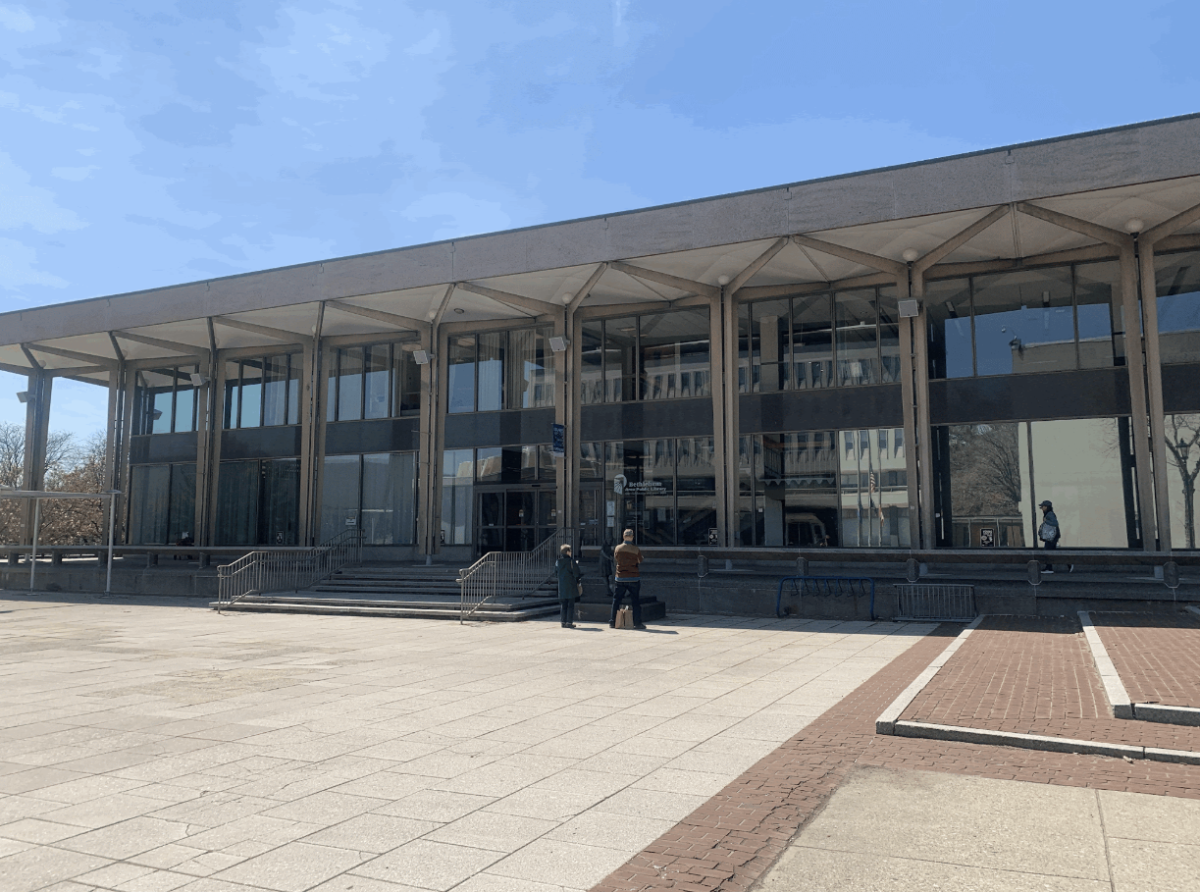
Back in 2007, the College’s Facilities Department recycled more than 11,000 pounds of scrap metal and over seven tons of mixed materials a year, hauling plastics, glass, and even compostable waste to Bethlehem’s municipal centers.
By 2008, the campus was experimenting with small but symbolic changes: ditching plastic bags from the Blue & Grey Café and launching “No-Tray Day” – eliminating trays from the dining hall – to cut food waste and water use.
The Sally Breidegam Miksiewicz Center for Health Sciences, which opened in 2017, is LEED certified, a testament to environmental conservation. However, the new HUB prioritized WELL certification over LEED.
Now, in 2025, it’s not entirely clear how those early initiatives have evolved. Some efforts remain visible, such as streetlights and parking lot light fixtures that have been converted to energy-efficient LEDs. Electric vehicle chargers now sit in Parking Lots A and X.
The Millennium Fellowship selects eight Moravian students annually to work on sustainable development projects, such as sustainably recycling materials from the HUB demolition.
According to recent Facilities reports, the College recycled over 29 tons of single-stream materials in 2023, 27 tons in 2024, and, as of Sept. 1, 18 tons in 2025.
But important questions linger. Unlike many regional institutions, Moravian has no campus sustainability coordinator, a role that typically oversees carbon accounting, waste audits, energy strategy, and student engagement.
Without that position, it’s unclear who, if anyone, is responsible for long-term environmental planning, transparency, or goal-setting at Moravian. There are no current plans to install solar panels on campus, despite their widespread adoption at schools of comparable size across Pennsylvania and New Jersey.
In regards to recycling, weight alone doesn’t show what percentage of material actually avoids the landfill.
When asked what happens after Moravian’s bins are emptied, Grounds & Athletics Services Manager Walter Fries said, “After our hauler picks up the recycling, it gets taken to East Penn Sanitation.”
After a brief call with East Penn Sanitation, the ultimate fate of Moravian’s recycling remains difficult to verify, a growing issue nationwide as contamination rises and processing costs increase.
Hazardous waste, according to Fries, “is removed on an as-needed basis” by a federally registered remediation company, which provides a manifest of items collected. That process appears orderly and compliant, but the broader infrastructure around everyday waste remains opaque.
Moravian once stood out for taking visible, student-driven environmental steps. But in an era defined by intensifying heat, shrinking budgets, and federal sustainability incentives, momentum matters. LED bulbs and EV chargers are improvements, but without a cohesive strategy, they function more like isolated upgrades than components of a resilient plan.
Peer institutions publish annual sustainability reports, track emissions, and set targets for waste diversion. They apply for grants to fund renewable power. They hire professionals to weave environmental considerations into facilities planning, dining, housing, and academics. Without comparable benchmarks, Moravian’s progress is difficult to measure or hold accountable.
Students who care about climate action are left wondering where responsibility lies.
“Recently, we found out that there’s actually a sustainability manager within USG, which surprised us because most students didn’t even know that role existed (we didn’t),” said Eco Club President and psychology major, Jordan Guerrier ‘27
Eco Club decided to collaborate with USG last semester to increase its visibility and show students that someone is advocating for sustainability in the student government. Eco Club also partnered with the City of Bethlehem’s sustainability coordinator, which helped connect campus efforts with what’s happening in the larger community. It was all a part of their ECO Week, which was held last semester with United Student Government.
“Honestly, we’ve learned that getting sustainability projects approved on campus can take a lot of time because there are so many people you have to go through just to get something started,” Guerrier said. “It’s not always easy, and we definitely wish there were more university-wide sustainability efforts, such as a full-time sustainability coordinator, composting options, or solar panels.
“When we held talks or guest speakers, even giving out incentives, no one came, but when we made it more palatable, we’ve seen more change and enthusiasm,” Guerrier added. “Our goal is to show that caring for the environment doesn’t have to feel heavy or overwhelming; it can actually be fun, creative, and community-driven.”
As the world moves toward renewable energy and stricter environmental standards, students will continue to ask: Is Moravian keeping pace, or falling quietly behind?



Cory Dieterly • Nov 7, 2025 at 10:16 am
Nice article!