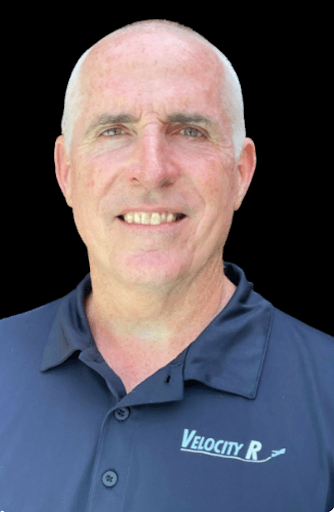
Mark S. Cronin, Moravian’s aviation program director, is a pilot instructor with over 40 years of aviation experience, including almost a decade in the U.S. Air Force as an A-10 Pilot and an instructor pilot, and 32 years for American Lines as a Chief Pilot and Director of Flight Management and Operations. In 2019, he established the velocityR foundation to assist people seeking careers in aviation.
What inspired Moravian University to launch the aviation program at the beginning of fall 2026?
Based on my discussions with them [Moravian University representatives], they conducted a rigorous review of what other schools were doing. They also examined the industry and its needs, specifically workforce development programs, including a pilot, and considered possible future air traffic controllers and, to some extent, aviation maintenance technicians.
How does the program reflect Moravian’s broader strategic goals?
Moravian, as with any school, needs to evolve with the times. When opportunities in the industry present themselves, Moravian needs to be able to train people for those skill sets.
What are the key values or guiding principles that you plan to bring to the program?
We’re going to create a premier program. Given my work experience, background, and familiarity with the aviation industry, I have an excellent understanding of what the industry needs and what it’s looking for in future candidates. Therefore, I’m planning to align those needs with a combination of the courses already offered at Moravian and the coursework mandated by the FAA.
What are the initial degree tracks that you’re offering?
The two degree tracks are aviation management [the non-pilot track] and professional pilot [the pilot track].
How is the program going to combine theory, classroom academics, what we usually do at school, with hands-on flight training?
Moravian has signed an agreement with Fly Gateway. They are one of the premier flight schools in Pennsylvania and Delaware. They already have agreements with Lehigh Valley Carbon Community College and Marywood University. So they have experience with these programs, and along with Moravian University, a premier university with a premier flight training program. They brought me in to help make the final connections with the industry itself.
How much time will they be spending in the classroom, and how much time doing hands-on pilot training?
It’ll be split in half for the entire four years. I say in half, but percentages may differ a little; but an incoming freshman will immediately start both ground school and flight training and continue through their four years.
Will the course load be rigorous?
The program we’re trying to put together will have a rigorous course load and curriculum, and that will benefit the students who come out of it, so that industry and hiring companies will recognize the quality of the education this program will provide.
Where’s the flight training going to take place?
The flight training will take place primarily at Queen City Airport. Partial training may be available at Lehigh Valley International Airport, depending on the aircraft’s maintenance condition and the portion available for training.
What training facilities are you going to attend at the airport?
There’ll be a specific piece of property designated for Flight Gateway where Moravian students will train. The facility will include classrooms, and we are also in the process of selecting a vendor to install simulators there.
What certifications or credentials will graduates be eligible for?
We’re striving for a restricted airline transport pilot certification. Now, there’s a lot that goes behind those words. They’ll start and earn their private pilot certificate, then their instrument rating, then their commercial rating with instrument privileges, then their multiengine rating, and finally their certified flight instructor rating. Hopefully, those who achieve that will come back as instructors for the program. Restricted ATP requires a letter of authorization from the FAA; it allows the institute to issue restricted airline transport pilot certificates. Once they achieve the required number of hours, if just at its basic level, a person that goes and takes flight training on their own to reach the number of hours, they’d have to acquire 1,500 hours of flight experience and won’t be able to accomplish it until the age of 23. by being able to offer a restricted airline transport pilot certificate, that same person would only need 1,000 hours and could achieve it at the age of 21.
What is the timeline for the Air Traffic Controller and Aviation Maintenance Technician programs?
That’ll be dependent on how long it takes us to get this program. The objective is to start both the aviation management and professional pilot programs for the fall semester of 2026. If I were to project out, they would be looking to offer some kind of air traffic control program, probably in the 2027-2028 timeframe, but that’s a guess on my part.
Are internships and industry partnerships part of the program?
Yeah, that’s going to be part of the program. It’s one of the reasons they brought me in: I have quite a few connections in the airline industry, and we’ll leverage them on behalf of the Moravian students so they can offer them opportunities outside the classroom.
What will graduating students be able to do career-wise once they’ve finished?
Well, it depends on the program. In aviation management, they can work anywhere in the aviation industry, on the business side, including manufacturers and aerospace contractors. So anything from Piper aircraft to SpaceX. They’ll have a broad enough range of programs that they could go into both airport and airline management.
How will students get financial support for this program?
That’s still in discussion right now. As for scholarships, yes, there are quite a few. Through my work and my foundation, I founded VellocityR Aviation Foundation in 2019. You can look at it at VellocityR.org. I have a list of just about every aviation scholarship I can find. It’s available in a free downloadable format, and they can download an Excel spreadsheet. But there are scholarships, whether they’re part of the financial aid package, that are still in discussion right now.
Will there be support, such as mentoring, advising, or tutoring, given the course’s rigorous workload?
Yes, that’s the plan. That’s one of the reasons I got brought in, and we’re also looking at adjunct faculty, individuals with vast experience in each of these professions. So absolutely, mentorship and guidance will be part of this program.
How many students do you estimate you’re going to be able to get in this inaugural cohort?
Well, that remains to be seen because it’s new. It is very common for other aviation programs to fill up and turn students away. So the initial assumption is that we would have enough students to facilitate a fairly effective program. We’re considering limiting some classes to a maximum of 25, but we wouldn’t forego opening another class if we had more than 25.
Do you have a long-term growth plan to increase the number of students per class?
Yes, you know, as with any school, the objective is not to have to turn away potential students. The good news is that demand in the industry is such that these positions will remain in high demand well into the future.
For students from non-aviation backgrounds, is there a pathway to change their foundational coursework so they can enter your program?
Currently, we are setting up the two pathways so they share standard features. There is no coursework needed for the aviation management, per se. There is required coursework for the professional pilot. Still, we’re trying to parallel them so that if someone in the Aviation Management degree wanted to transition to a Professional Pilot degree, they could. However, regarding students already here who wish to transfer, it remains to be seen how we would handle the matriculation process.
Is there anything else you’d like to add?
This is a fantastic opportunity, especially in the Lehigh Valley, that Moravian, a school with an excellent reputation, has chosen to develop. It will significantly benefit the students. We will be working closely with the surrounding airports and aviation-related manufacturers to ensure they have as many opportunities as possible. Oh, and please visit velocityR.org for any more information.