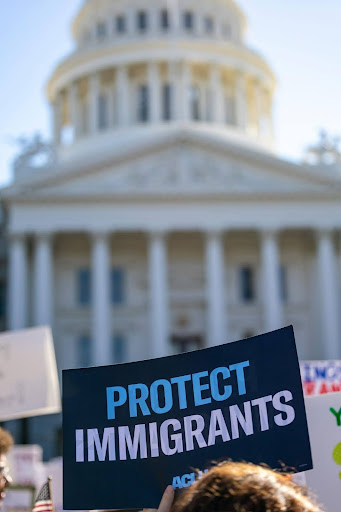
On Jan. 29, 2026, I attended an ICE Student Panel Walkout hosted by Spectrum and Latino Rhythm Club. The panelists invited attendees to discuss current politics surrounding the U.S. Immigration and Customs Enforcement (ICE) raids that have escalated across the country. When I was at the event, hearing everyone pass around a microphone and voice their opinions and emotions, I could not stop thinking about what it means to be a Latino during such dismal times.
“For me personally, I believe that injustice anywhere is a threat to justice everywhere, so I want to fight for those who can’t. These [student] strikes and protests are all informational so that we as students and as allies can learn about the power of community to redirect that to offices that can push the change that we want to see,” stated panelist Alondra Ramirez, ‘26.
Not to give the year’s most asinine understatement, but this is a dark period for Hispanics in the U.S. In the past year, ICE has been abusing its power in trying to “regulate” illegal immigration to a heinous extent. Since Sept. 8, 2025, the Supreme Court has greenlit racial profiling when it comes to immigrant stops; this means that ICE agents can target someone based on race, language (either speaking Spanish or speaking English with an accent), and employment. This has, of course, led to the detainment of U.S. citizens and other racial groups, such as Native Americans. While we are witnessing the terror of ICE and the murder of citizens such as Keith Porter, Renée Good, and Alex Pretti, these operations are under a veneer of “protecting” our country. This isn’t about vitriol toward undocumented immigrants – this is about antagonizing all immigrants and scapegoating them for issues in the country.
According to a November 2025 Pew Research Center study, around 52% of Latinos are concerned about their friends and loved ones being deported, a 10% increase from March. Unsurprisingly, the mass deportations, false detentions, familial separations, and racial targeting have led to a mental health crisis among Latinos.
You’ll hear words like “Latino fatigue” throughout social media algorithms because many of us feel the impact that the administration has had on our communities. According to the executive director for the Coalition for Immigrant Mental Health, Cindy Eigler, people “are not feeling connected, given the isolation, and people are not feeling a level of belonging, given all the anti-immigrant rhetoric that is so prevalent right now.”
In broad daylight, we see traumatized children like Liam Ramos used as bait to detain illegal family members. We see ICE protesters being relentlessly teargassed in Minneapolis and other protesting cities. It is impossible to turn a blind eye to what ICE is doing to our communities and those who wish to protect them. It’s equally impossible, as Latinos, not to feel drained and depressed towards the antagonism and harmful rhetoric that is attached to our identities.
It is painful whenever I hear echoes of ICE scoping the Lehigh Valley and stopping individuals at random. It is terrifying to think that my mother, a Colombian immigrant and U.S. citizen since the 90s, could be one of the unfortunate individuals that is targeted if someone hears her speak Spanish or English with an accent. And, I know my Latino friends who echo that very same sentiment.
Amidst the mass deportations, however, there are moments of hope that contest the rampant xenophobia we’re witnessing. If Bad Bunny’s halftime show performance or local ICE protests are anything to go by, it’s that Latinidad and justice will not be extinguished. This country, founded on the backs of Latinos who work to the bone making a living, cannot silence such an impactful, powerful population. If you know about the history of this country, it’s that exclusion and prejudice will not prevent our communities from dismantling the institutions that are currently present. When I attend student-led walkouts, I don’t feel so alone in that pursuit of consciousness and above all, justice.