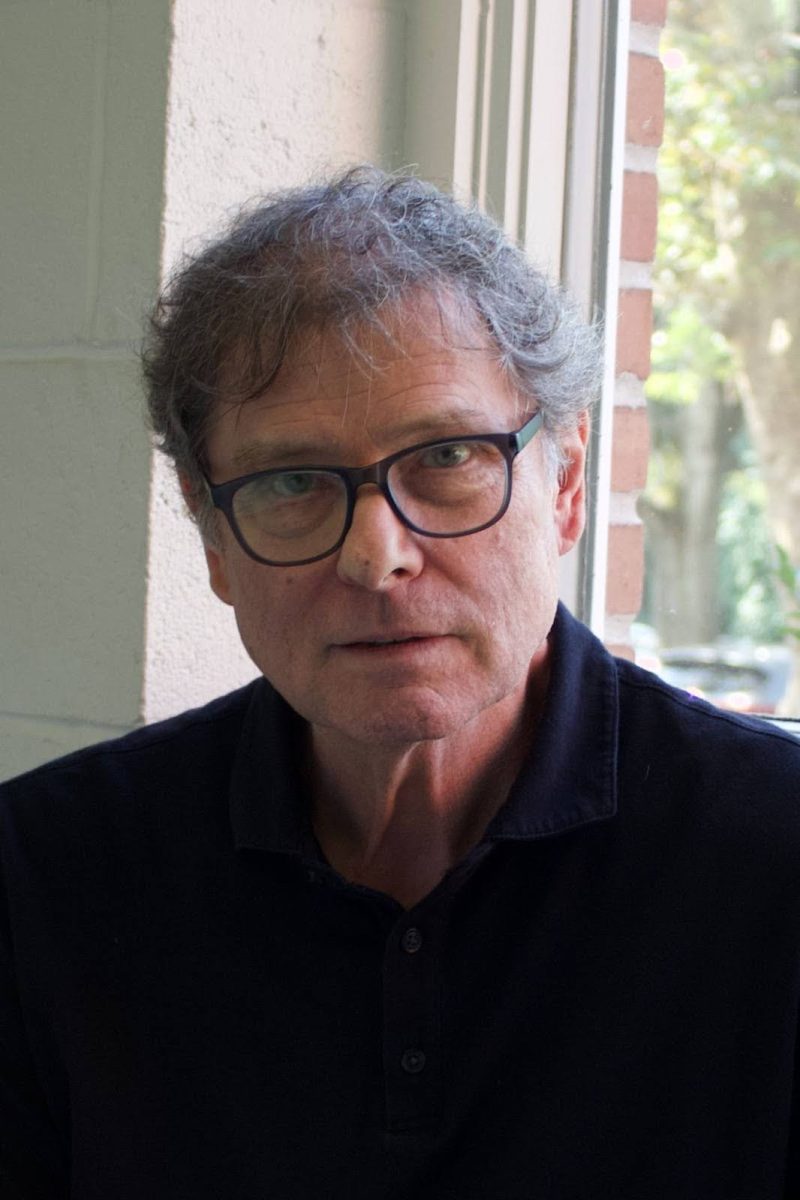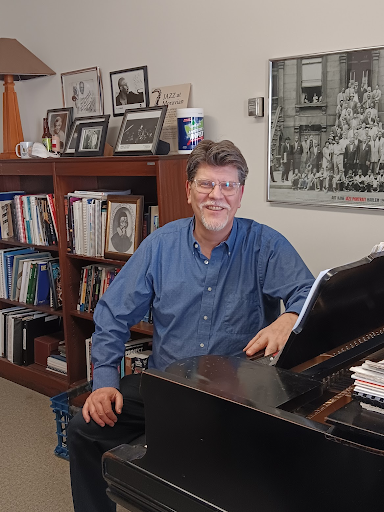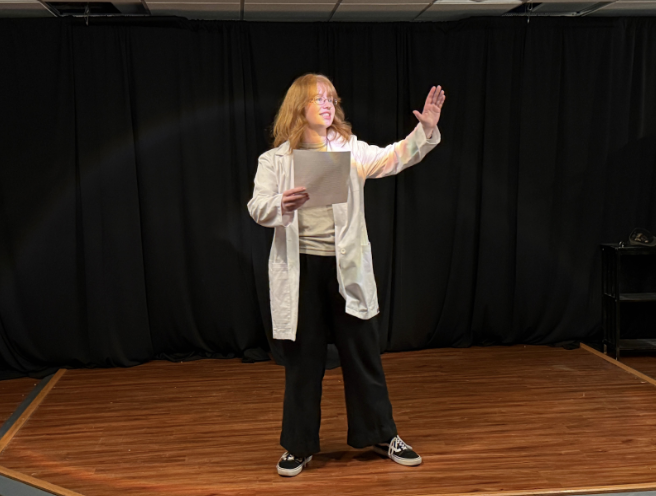

Sharon Muhfeld is a history professor with a bachelor’s degree in English and history from Bucknell University, a master’s and a doctorate in American history from the College of William and Mary. She focuses on Native American communities in the Ohio River Valley during the American Revolution.
What inspired you to go into your field of study?
I started my college career as an English major. Still, I soon discovered that a history major at my university required only eight courses, so I quickly added it as a second major. I had always thought of English as my primary major, though, until partway through my junior year, when I began exploring the idea of doing an honors thesis and found myself drawn to history topics. In terms of my decision to pursue academia as a career, it was pretty straightforward.
As I reached the second half of my undergraduate years, people began to ask, “What would you like to do next?” and I would always reply, “I’m already doing what I love to do best, but they are kicking me out!”
At that point, I assumed that everyone else around me felt the same way. However, when I realized that most of my classmates were actually excited to graduate and move on to something other than school, I concluded that my interest in academia was unique and worth pursuing.
What research are you currently working on?
My dissertation research focused on indigenous communities in the Ohio Valley during the American Revolution. In the work I’ve done since, I’ve never really left that region or that era. I was drawn to that time and place because it was such a chaotic moment full of intersecting power struggles between individuals, communities, and empires, and the narrative line is far from linear.
What do you think is the most recent significant development in your field of study?
There are always numerous interesting ideas circulating, but one new book that I think is especially helpful for examining the displacement of native people is Samantha Seeley’s “Race, Removal, and the Right to Remain.” She talks about the connection between migration, removal, and the development of a United States national identity, arguing that one of the most fundamental obsessions of Early Republic politicians was defining “the people.”
Removal was an easy way to determine who didn’t qualify. Much of what Seeley covers is not new, but her efforts to show that US negotiators for land and removal were divided (usually between federal and state interests). Indigenous defenders of land were also divided (usually between those who wanted to join with others in large confederacies and those who tried to protect local interests), and the fact that she looks at how this story played out in many different regions collectively offers a reframed perspective.
What job would you have if you couldn’t be a professor, regardless of salary and job outcome? Why?
It’s quite possible that my favorite thing to do in life is to read books aloud for an audience, so something like being an audiobook reader sounds pretty amazing.
What do you know now that you wished you knew when you were in college?
In college, I felt pulled in many different directions: academic pursuits were important to me, but I was also involved in numerous organizations and activities on campus, all of which came with distinct social groups that each required a certain amount of attention.
Rather than feeling overwhelmed, I wish that I could have viewed those years as a dress rehearsal for the pace of most of life, realizing that simply being busy doesn’t have to equate to stress.
What is your biggest student pet peeve?
My biggest student pet peeve is “the early pack up.” With five minutes left in class, one person suddenly shuts down their laptop and puts it away, triggering the same action by almost everyone else in the room. I’m always baffled because if the material we covered in those last five minutes weren’t necessary, I would have packed it in myself!
For most students, the secret to almost always to watch sports, which is why I’m still paying exorbitant amounts of money for cable. After all, you never know when you’re going to need Big 10 Women’s Volleyball in the middle of the night! For someone who loves to read, I sadly can do precious little of it during this stage of my life.
Currently, I read the books my daughters (ages 17 and 13) are reading so that we can have conversations about the books that excite them. Case in point, I just finished reading [Ann Napolitano’s] “Hello, Beautiful” because my senior found it meaningful.