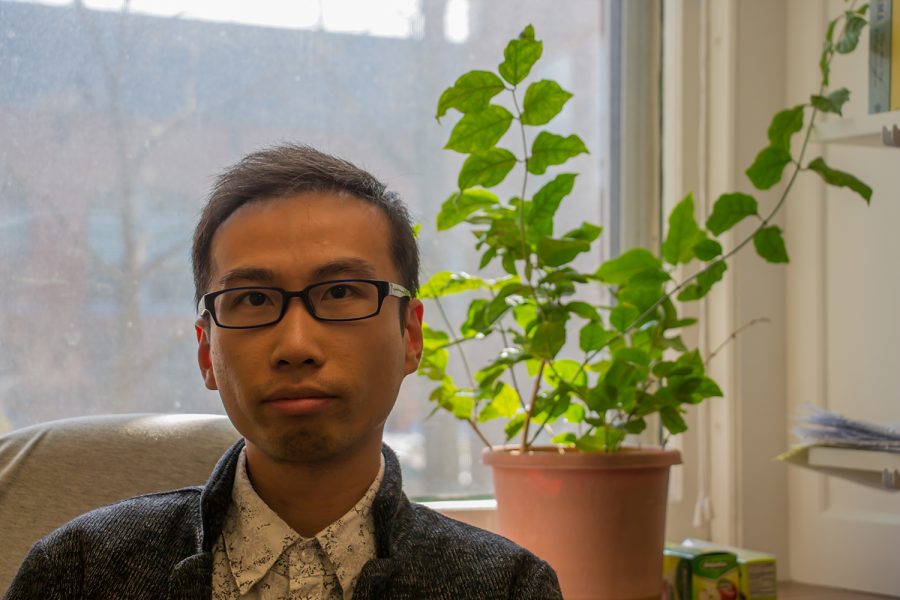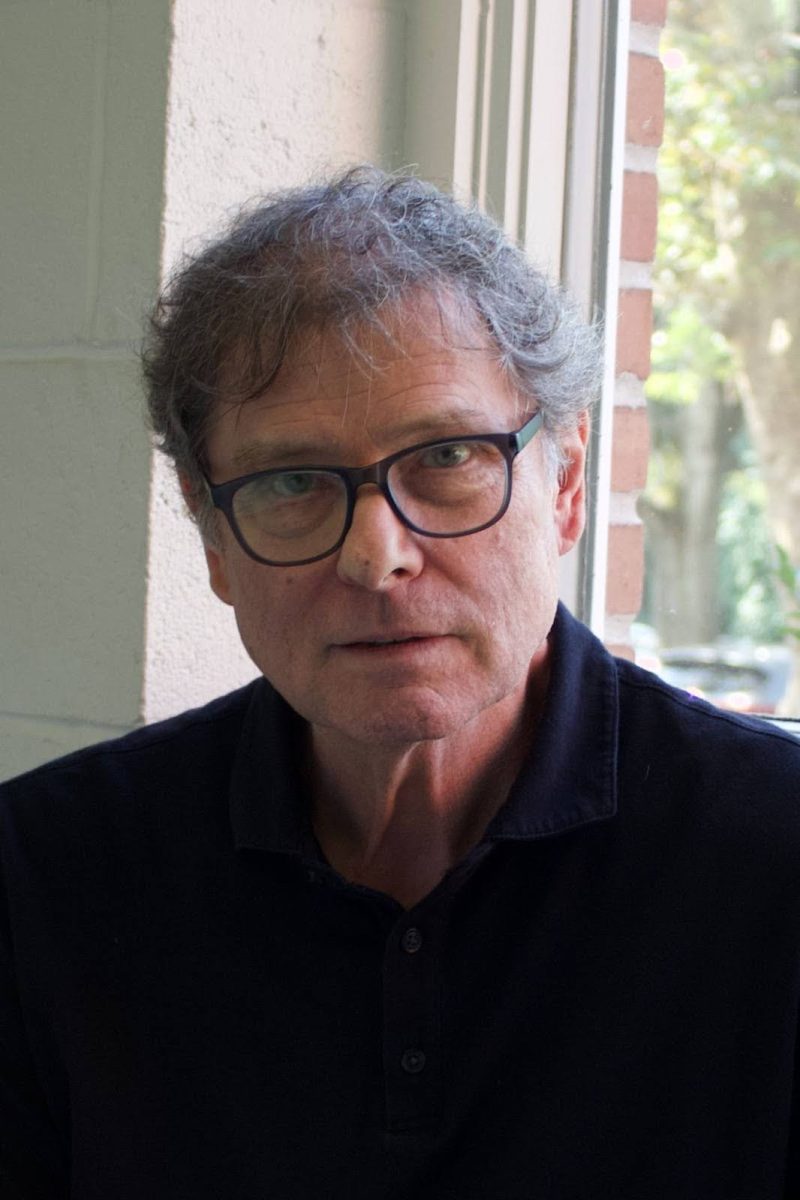

Allison Bloom is an associate professor of anthropology at Moravian University. She earned her bachelor’s degree in women’s studies and Hispanic studies at Vassar College, and her master’s and Ph.D. in anthropology from Rutgers University. She is also the co-chair of Moravian’s Women’s, Gender, and Sexuality Studies (WGSS) program. Her research focuses on the intersections of gender-based violence with health, immigration, disability, and aging.
What inspired you to go into your field of study?
My field of study is technically cultural anthropology, but I consider myself an applied anthropologist. I come from the world of human services and social work. I wanted to study in a field that would allow me to look at different cultures and different ways of doing things, but also have an applied component to really understand people and how systems work for or against certain people. So, that is what led me to cultural anthropology, but sort of at the intersection of social work and anthropology.
What research are you currently working on?
I am currently working on a book that is trying to offer some ideas for both practitioners and researchers on intimate partner violence, or domestic violence, as some folks will commonly refer to it. [I am] specifically thinking about how to cross divides between secular service providers, like community-based resources around intimate partner violence, and faith providers, like faith communities, faith leadership, and different congregations.
How can we make sure that clients, or survivors of intimate partner violence, who are receiving services at a crisis center and are also people who lean on their faith, are not feeling alienated by those services and are able to really look at the best of both of those communities to support one another?
What do you think is the most recent important development in your field of study?
I think that what we are looking at now is, unfortunately, how we can support people doing this work on the ground as researchers, when there is much less support for providing human services. [There’s] the rolling back of a lot of policies and resources. How can we support folks trying to keep things afloat, while also making sure that services are trauma-informed, that they’re being offered to a diverse population, and that they’re appropriate for the LGBTQ+ community?
So, I think there are a lot of us who are trying to support what’s already being done with less and less resources, while also being mindful of that diversity perspective. How can we make sure that services are as good as they can be, given all the restrictions that are happening?
What job would you have if you couldn’t be a professor, regardless of salary and job outcome? Why?
I actually have a very clear answer to this. I am currently enrolled in Moravian’s master’s degree in social work program. I still love practitioner work, even though I’ve kind of been outside of that for a while. I’ve always thought that I would love to be a therapist in some capacity. I’ve done some counseling work, working with survivors of intimate partner violence. But I don’t have a professional degree in that.
So, as part of my own professionalization, I decided to get another degree. I don’t know exactly where that’s going to lead, but maybe I will be a therapist in some capacity at some point. In addition, this education is helping with the work that I already do at Moravian and in my research.
What do you know now that you wished you knew when you were in college?
Oh my, so many things. I think one of the things that was kind of tough was not knowing how things were going to work out. I knew I was interested in a lot of different things, but there wasn’t really a clear career path to do those things and to work towards those things. But, following my gut and following my passions actually did lead to a career.
And I still pivot in my career, and am always trying to learn and do new things. I would look back and say, “It’s okay to not know exactly what the path is going to look like. Go with your gut and continue to pursue the things that you care about, and that will lead you somewhere fulfilling.”
What is your biggest student pet peeve?
I rarely get that annoyed by students, thankfully. I find that most Moravian students are really respectful. Maybe [my pet peeve is] students being overly apologetic. I tend to look at students as adults, and they make decisions, and sometimes those decisions are not what I would choose for them. But, [students] are free to make their own decisions, and I don’t think that they need to be overly apologetic for why they made particular decisions.
What should students expect from your classes? What is the secret to succeeding in your classes?
I think one thing to always expect from my classes is that my main goal is for students to walk away having the tools to be more critical thinkers about what’s happening in the world around them and to be able to apply that to whatever career they’ve chosen. A lot of my students are going into very different kinds of careers, whether it’s healthcare, social work, or criminal justice. I try to speak across many different potential career paths and to have students be able to walk away with something that’s going to be really useful in their toolboxes.
In terms of how to be successful, I think communication is really important. I’m pretty open and try to be respectful towards [students] as long as students give me the same respect. Part of that is communicating. If there’s something going on or there’s an issue, students need to be able to communicate that with me, or I can’t work with them to resolve it or to help them improve.
What was the last streaming show that you binge-watched or the last good book that you read?
I just finished the recent season of “Bridgerton.” That was excellent, as per usual. And I just finished listening to the audiobook of “Home Front” by Kristin Hannah. It takes place in the early 2000s around 9/11, which was a really formative time for me as a person, so it was really interesting to read.
What is something interesting about you that most people don’t know?
I used to have a pet poisonous toad named Don-Juan. DJ, for short. I also have three kids, and two of them are twins.
What might you say to someone who attempts to discredit or demean women’s, gender, and sexuality studies?
Oh, boy. I would say that gender is an inescapable part of the way societies function, and we can’t ignore that. It’s an important thing to study in order to understand human behavior, why we live the way we live, how to improve society, and make sure we’re serving all members of society.
Is there anything else you’d like to share?
I’m a newer co-chair of WGSS, so if folks have any questions, they should feel free to reach out, and we’re always happy to answer any questions and get students more involved in the program.